

Best Solar Inverter for a Posho Mill in Kenya
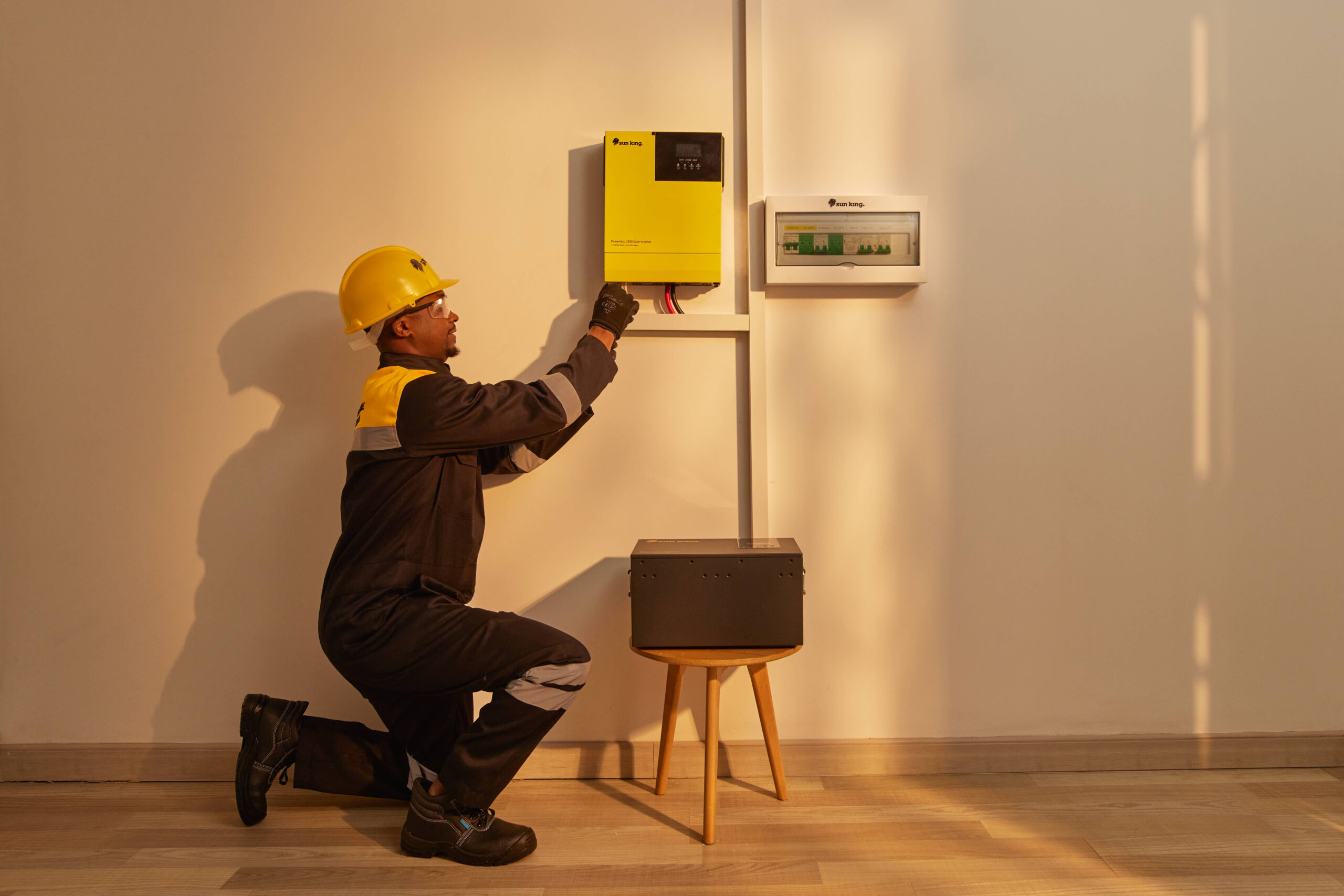
A standard commercial posho mill needs a motor rated between 5 HP and 10 HP, roughly 3.7 kW to 7.5 kW of continuous power, with larger industrial mills running higher still. Sun King’s PowerPlay Pro covers small DC mills like the Agsol, while the PowerHub can be customised to cover larger energy needs alongside the mills.
For a full-size commercial mill, Sun King’s custom PowerHub Ultra can be combined into larger 3-phase systems, with 15 kW or 30 kW setups recommended for 3-phase motors. A free site visit confirms the exact setup for your motor and hours of use. Contact us to learn more.
When the lights go out mid-grind during a blackout, a posho mill stops with sacks of maize still waiting and customers standing outside the door. Motors that drive a commercial posho mill typically need between 3.7 kW and 7.5 kW of continuous running power, well above what a fridge or a bank of light bulbs uses.
This guide walks through how much energy your mill actually needs, which Sun King system fits, and how to find the best inverter for a posho mill in Kenya, whether that means a system available today or a custom plan built through a site visit.
How Much Energy Does a Posho Mill Need?
A standard commercial posho mill in Kenya runs on a motor sized between 5 HP and 10 HP, equal to roughly 3.7 kW to 7.5 kW of continuous running power. Larger industrial mills can reach 15 kW or more. These figures describe the motor running steadily once milling is underway, not the moment it switches on.
Electric motors generally draw more current the instant they start than once they are running at full speed. How much more depends on the type of motor fitted to your mill, which is one of several details a technician checks during a site visit rather than something to guess from the mill’s horsepower rating alone.
A few things worth knowing before you start comparing systems:
- Running power is what the motor draws once it is milling steadily.
- Starting power is a short burst above that, needed to get the motor moving.
- Motor type changes how big that burst is, so two mills of the same HP can behave differently.
- Daily hours of use decide how much battery storage makes sense alongside the inverter.
Knowing your mill’s energy needs before you buy anything makes the conversation with a Sun King technician far more useful. Instead of describing your mill in general terms, you can talk in kW and HP, and get a straight answer about what fits and what does not.
Can Solar run a Posho Mill in Kenya?
Yes, solar can run a posho mill in Kenya, though what system you need depends heavily on the size of your mill and how many hours a day you need it running. A small mill with modest daily hours sits in a very different category from a busy commercial operation milling from morning until evening.
Battery storage matters here as much as the solar panels themselves. A mill that only needs to run during strong daylight hours has different energy needs from one that has to keep going into the evening or through cloudy stretches, and that changes how much battery capacity the system needs to carry it through.
This is also where frequent blackouts change the calculation for many small business owners. A posho mill that depends on the grid loses income every time the lights go off, while a correctly sized solar system keeps running on its own schedule regardless of what the grid is doing.
Which Sun King System fits a Posho Mill?
The right Sun King system depends on the type of mill you run, not just its size.
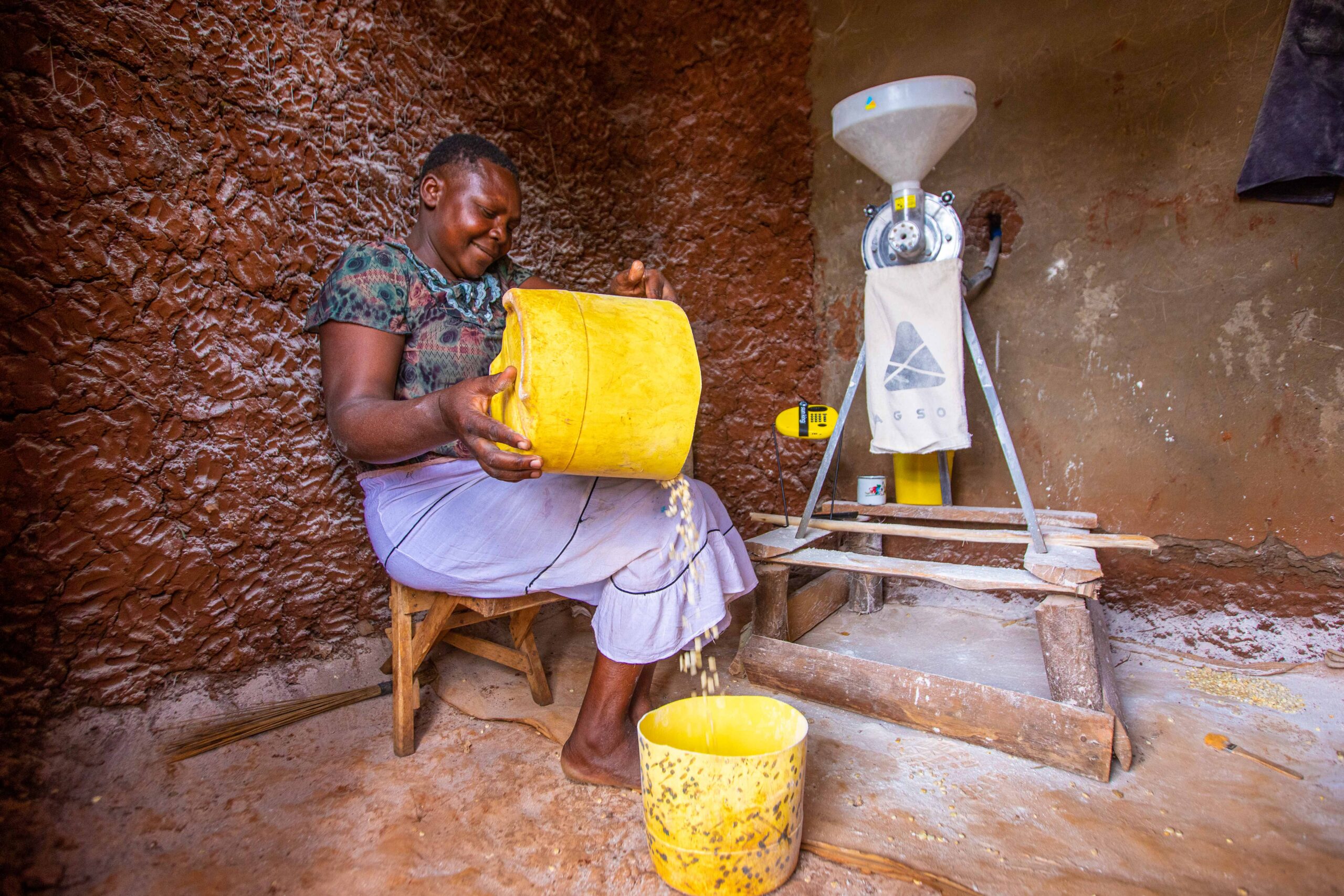
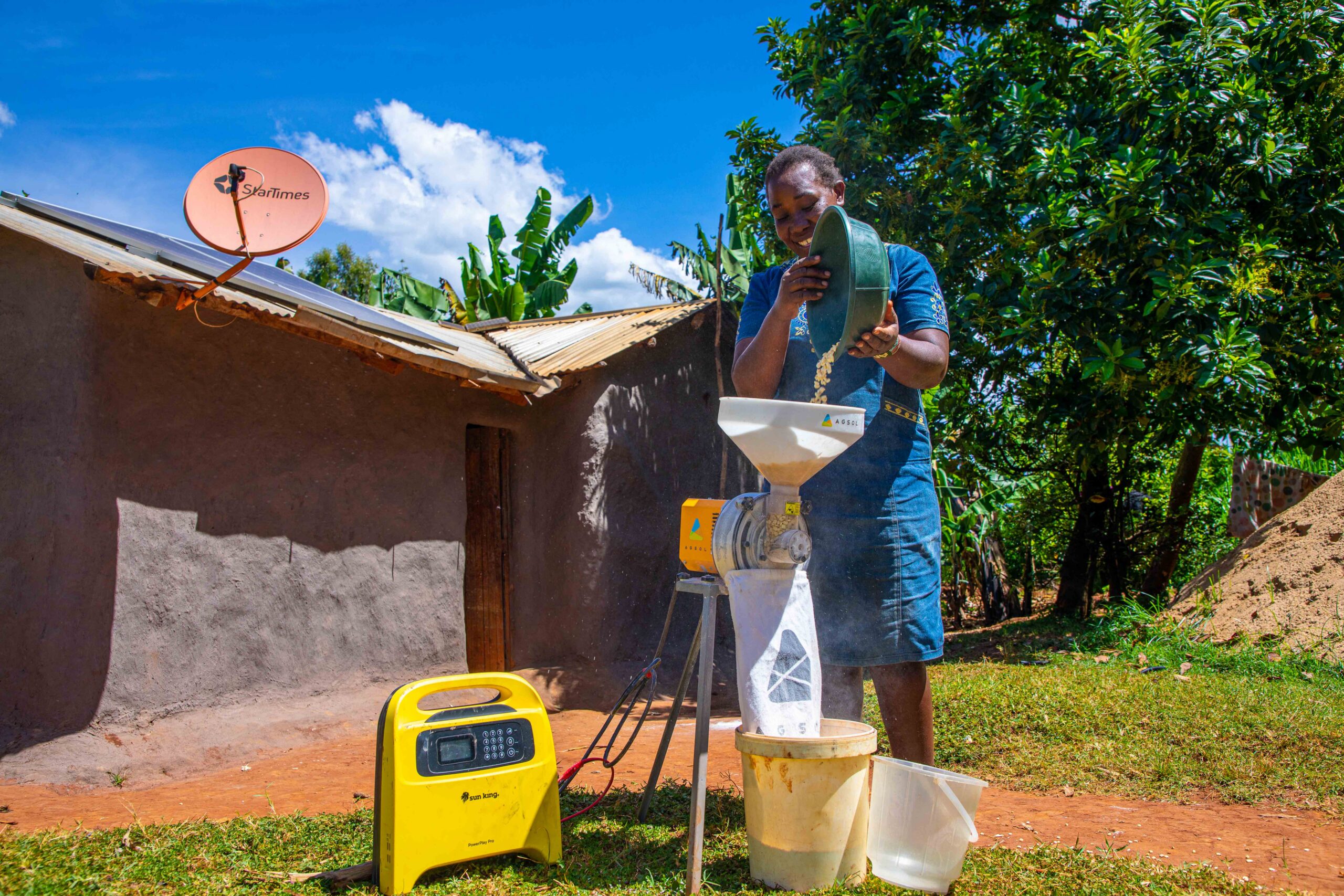
Small DC mills. Sun King has worked with the Agsol mill, a DC-driven mill that connects straight to a PowerPlay Pro’s control unit rather than through the inverter, averaging 600 W continuous with spikes up to 970 W. This is a specific type of mill built to run on a smaller system, not a stand-in for a typical mill running on mains power.
Smaller energy needs alongside a mill. For mills that fall outside that category, the PowerHub Plus covers smaller energy needs, suited to a posho mill business running alongside lighter equipment rather than one large machine on its own.
Full-size commercial mills. A mill on a 5 HP or larger motor needs more continuous power than the PowerHub Core or Plus bundles provide. For mills at that scale, Sun King’s PowerHub Ultra system is built to be combined, with individual 5 kW units joined into a larger system. For 3-phase motors, Sun King recommends 15 kW or 30 kW setups specifically, since these keep the system balanced across the combined units. There is no dedicated PowerHub Ultra product page yet, so the fastest way to ask about it is directly through the team.
Contact us through the PowerHub page to find out which of these fits your mill.
What About Bigger Commercial Posho Mills
Bigger commercial posho mills, the kind running on a 7.5 HP motor or higher, need a 3-phase system built from Sun King’s PowerHub Ultra. Since Sun King recommends 15 kW or 30 kW setups for 3-phase motors, getting your exact motor rating confirmed matters more than for a smaller single-phase setup.
During a site visit, a Sun King technician looks at your mill’s actual motor, whether it runs on a single phase or three, and the hours you need it running, then builds a plan around those specifics rather than a generic estimate. This is the only reliable way to confirm what setup your mill needs, since motor type, phase, and daily run time all change the answer.
A free site visit is also where pricing gets confirmed for a setup this size, since a 15 kW system and a 30 kW system are very different projects. Submit the contact from on the PowerHub page to arrange a visit.
How EasyBuy works for Business Owners
EasyBuy is Sun King’s lipa mdogo mdogo instalment payment method, comprising a small deposit followed by weekly payments. For a posho mill business, this means you do not need the full cost of a system upfront before you can start running your mill on solar.
The process is straightforward. You confirm the right system for your mill, pay the deposit, and start using the system while making weekly cash or mobile money payments toward the balance. For larger commercial setups like a PowerHub Ultra configuration, payment terms are confirmed during the site visit rather than fixed in advance.
For current deposit and payment figures on any system, browse our solar inverter systems page.
What does a posho mill inverter cost in Kenya
Pricing for a posho mill inverter depends entirely on which system fits your mill, so it is not a single figure. Systems like the PowerPlay Pro and PowerHub have current pricing listed on their product pages. Larger PowerHub Ultra configurations are quoted individually after a site visit to assess power needs, since a 15 kW setup and a 30 kW setup are priced very differently.
Frequently Asked Questions
Can a solar inverter power a posho mill in Kenya
Yes, a solar inverter can power a posho mill in Kenya, though the size of system needed depends on your mill’s motor rating and how many hours a day it runs. Smaller mills fit more easily within Sun King’s standard systems, while larger commercial mills need a system built through a free site visit.
How many kW does a posho mill inverter need
A posho mill inverter generally needs to handle between 3.7 kW and 7.5 kW of continuous power for a standard 5 HP to 10 HP commercial mill, with larger industrial mills needing more. The exact figure depends on the motor fitted to your specific mill.
Does Sun King install systems for commercial posho mills
Yes, Sun King installs systems for commercial posho mills using the PowerHub Ultra, which can be combined into larger 3-phase setups for bigger motors. A free site visit confirms the exact setup your mill needs.
Can a single Sun King system power a 3-phase posho mill motor
Yes, a single PowerHub Ultra setup can power a 3-phase posho mill motor once multiple units are combined together. Sun King recommends 15kW or 30kW setups specifically for 3-phase motors, to keep the system balanced.
What is lipa mdogo mdogo
Lipa mdogo mdogo is Sun King’s instalment payment method, where customers pay a small deposit followed by weekly M-Pesa payments until the system is fully paid off. Visit the product page for your system or message the team on WhatsApp for current payment details.
How much does a Sun King posho mill system cost
The cost depends on which system fits your mill’s motor size and daily hours of use. Check the PowerPlay Pro or PowerHub product pages for more detail.
How do I get the right inverter for my posho mill?
A posho mill’s energy needs come down to its motor size, its phase, and how long it runs each day, and matching that accurately takes more than a general guide. Sun King’s PowerPlay Pro fits DC mills like the Agsol while the PowerHub fits all other needs, with bundles scaling from 2 kW to 30 kW. Browse our solar inverter systems page for more information.